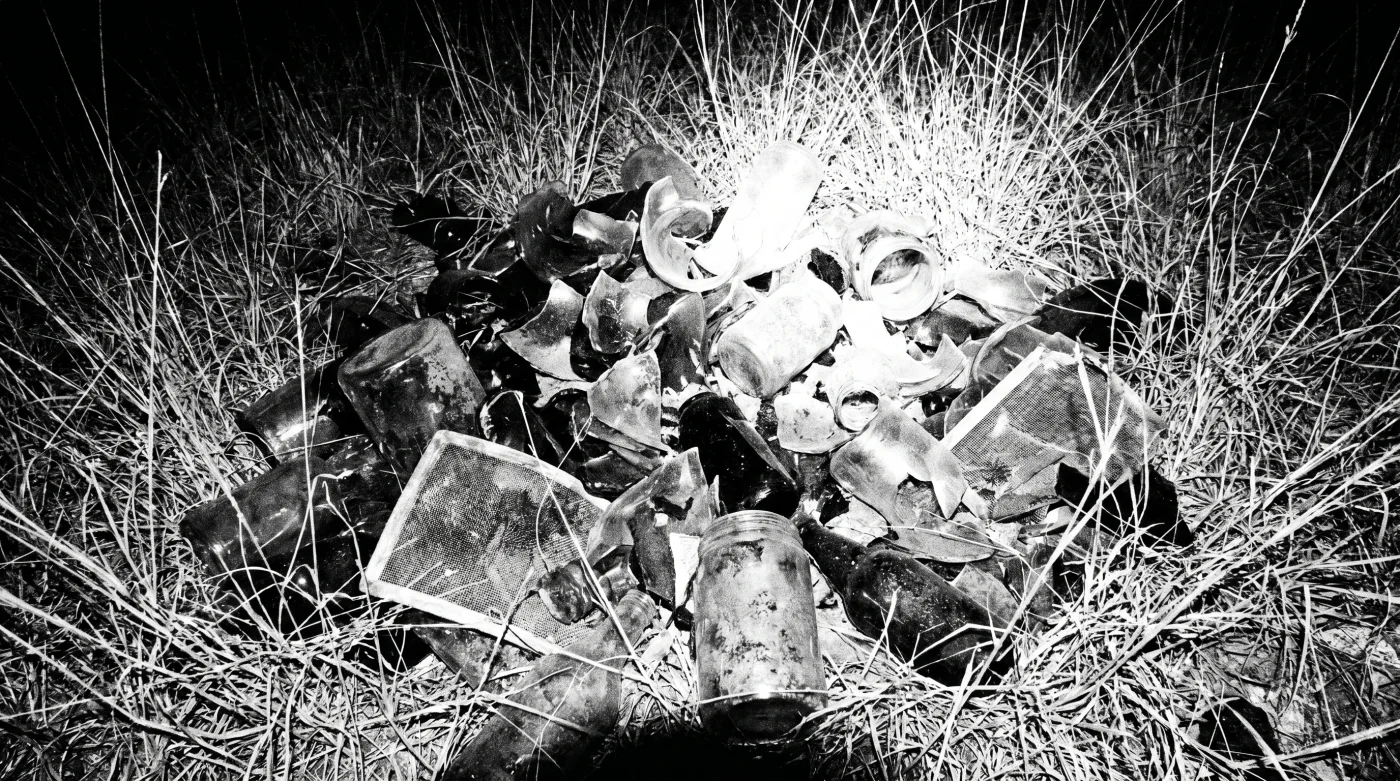
You pull a heavy casserole dish from a 425-degree oven. The smell of roasted garlic and bubbling fat hangs heavy in the kitchen air, a comforting end to a long Tuesday. You maneuver the glass pan onto a cold, slightly damp granite countertop, reaching for a serving spoon to portion out the meal.
Then comes the sharp, terrifying pop. It sounds like a muffled firecracker, followed instantly by the noise of heavy rain indoors as a hundred jagged pebbles scatter across your floor. You are left standing with empty oven mitts, staring at a ruined dinner and wondering how a piece of heavy-duty cookware just spontaneously detonated. We grew up trusting these transparent dishes implicitly, believing they were virtually invincible.
That assumption is built on a century-old reputation that simply no longer applies to most modern kitchens. The legendary durability of your grandmother’s favorite baking dish came from a very specific scientific formulation designed to survive laboratory fires, harsh chemical reactions, and the brutal conditions of early railway lanterns. It was engineered for extremes.
But somewhere along the line, the industry made a quiet, pragmatic trade-off. They altered the chemical recipe entirely, swapping out a brilliant heat-resistant formulation for one that was cheaper to produce and far less likely to break when accidentally dropped on a tile floor. The result is a persistent modern myth that constantly confuses physical toughness with heat survival.
The Perspective Shift: The Illusion of Invincibility
To understand why your glassware behaves the way it does, you have to look past the smooth, clear surface and consider the microscopic structure of the material itself. True borosilicate glass is an engineering marvel born out of necessity in the late nineteenth century. By adding boron trioxide to the traditional silica mix, scientists created a material with a remarkably low coefficient of thermal expansion.
In plain English, this means the glass barely swells when it gets hot and barely shrinks when it gets cold. It was designed to resist sudden temperature swings with absolute grace. Imagine the material as a set of perfectly lubricated shock absorbers on a heavy truck, quietly swallowing the violent shifts between a freezing refrigerator and a roasting oven without ever snapping or transferring the blow to the chassis.
However, thermal shock resistance is an entirely different metric from impact durability. This is where the grand misunderstanding of shatterproof materials takes root in our daily routines. True borosilicate glass can survive sitting over an open, roaring Bunsen burner flame for hours, but if it slips from your soapy hands and strikes a hard ceramic floor, it shatters into large, razor-sharp slivers.
- Shark skin hydrodynamic principles make modern submarines practically silent
- Cast iron seasoning is simple polymerized oil carbonization science
- Neodymium magnets reveal the strange reality of quantum locking
- Biochar application permanently alters suburban soil nutrient retention metrics
- Pocket spectrometers identify counterfeit gems without expensive lab analysis
Manufacturers eventually recognized that home cooks drop things far more frequently than they transfer dishes from a chest freezer directly into a blistering fire. Decades ago, they shifted US consumer production to tempered soda-lime glass instead. Soda-lime glass is mechanically tougher against a physical blow—it acts more like a boxer rolling with a heavy punch—but it is notoriously bad at handling sudden, rapid temperature changes.
Consider the daily reality of Dr. Silas Thorne, a 62-year-old forensic metallurgist and materials scientist who investigates why commercial products fail. Sitting in his cramped, dust-moted office surrounded by fractured car parts and shattered ceramics, Silas often points to the fundamental misunderstanding we have with our glassware. ‘We expect our kitchen materials to completely forgive our clumsiness,’ he notes, holding up a cloudy, thick shard of old laboratory glass. ‘We replaced a material that breathed with the heat for one that simply holds its breath until it shatters. When modern soda-lime glass experiences a forty-degree temperature drop in two seconds, the outer layer shrinks violently while the inside remains rigidly expanded. It literally tears itself apart from the inside out.’
Reading the Glass in Your Cabinets
You likely have a mix of these different glass formulas sitting in your cupboards right now, quietly waiting for their turn in the oven. Telling them apart is the crucial first step in preventing a messy, dangerous accident while cooking a family meal.
For the Vintage Hunter
If you frequent estate sales, antique shops, or thrift stores, you might spot older, opaque, or slightly yellowed glass dishes. If the brand name on the bottom is stamped with all capital letters, it is often a reliable sign of true, legacy borosilicate. These pieces are prized for oven-to-freezer transitions. You can bake a heavy lasagna, let it sit on a dry rack for ten minutes, and place it in the freezer without a second thought.
For the Modern Minimalist
Most clear glass baking dishes bought at a big-box store in the United States over the last thirty years are manufactured using tempered soda-lime glass. They usually feature a slightly blue-green tint if you look closely at the raw, thick edge of the rim. They are highly resistant to physical bumps against the side of a porcelain sink, but they demand absolute respect when it comes to absorbing heat.
For the Lab-Grade Purist
European-manufactured kitchen glass often still utilizes the original borosilicate formula, largely because European manufacturing regulations and consumer expectations developed differently over the decades. If you specifically seek out high-end, imported glassware, you are explicitly paying for the genuine thermal shock resistance that the original, century-old myth was built upon.
Handling the Invisible Stress
You do not need to throw out your current collection and replace your entire kitchen arsenal. You simply need to adjust how you physically interact with the materials you already own. Treating modern tempered glass requires a mindful, minimalist approach to temperature management.
When removing a blistering hot dish from the oven, never place it directly onto a cold, wet, or highly conductive surface like a stone counter, a metal stovetop grate, or a damp kitchen towel. Always use a dry cloth potholder or a thick wooden trivet to safely buffer the massive heat transfer taking place.
Avoid adding cold liquids to a hot pan under any circumstances. If you are roasting a chicken and need to deglaze the caramelized bits at the bottom of the dish while it is still scorching, use hot tap water or simmering broth. Pouring cold, refrigerated wine into a sizzling glass pan is an open invitation for violent fracture.
Allow your dishes to cool completely on the stovetop or a wooden board before submerging them in warm dishwater. The glass desperately needs time to normalize its internal pressure slowly, relaxing its rigid molecular structure before facing a totally new thermal environment.
- The Dry Landing: Always place hot glass on a completely dry wooden or thick fabric surface. Moisture accelerates heat loss exponentially, creating an instant weak point in the glass.
- The Pre-Warm Phase: Never put a cold glass dish into an oven that is already preheated beyond 350 degrees Fahrenheit. Let the dish sit at room temperature for thirty minutes, or place it in the oven while it slowly preheats.
- The Liquid Rule: If your recipe calls for adding liquid mid-bake, ensure the liquid is heated to a minimum of 150 degrees Fahrenheit on the stove before pouring it into the roasting environment.
The Bigger Picture
Discovering that your reliable, heavy kitchen tools are not completely invincible might feel like a slight betrayal by modern manufacturing. But recognizing the honest limitations of the objects you use daily actually brings a quiet, profound sense of control to your cooking routine. You are no longer guessing why things unexpectedly break in your hands.
It is a necessary shift from blindly following outdated household advice to understanding the active physical systems at play in your home. The glass isn’t failing you or acting unpredictably; it is simply behaving exactly as its specific chemistry dictates under pressure.
By reading the subtle clues in your cookware—the slight blue tint of the rim, the specific stamp on the bottom—you become a much better steward of your immediate environment. You can bake with confidence, knowing exactly where the invisible boundaries of your materials lie, keeping the loud, shattering surprises far away from your peaceful dinner table.
Physical durability and thermal resilience are rarely the same thing; learn which one your tool was built for, and it will never fail you.
| Key Point | Detail | Added Value for the Reader |
|---|---|---|
| Borosilicate Glass | Expands very little under heat. Found in labware and pre-1990s US consumer baking dishes. | Total peace of mind when moving dishes from extreme cold directly into hot ovens. |
| Tempered Soda-Lime | Tough against physical impact but highly susceptible to rapid temperature changes. | Less likely to break if knocked off a low shelf or bumped in a crowded ceramic sink. |
| Visual Identification | Blue/green rim tint usually indicates modern soda-lime. Clear/yellowish indicates older borosilicate. | Empowers you to safely categorize your kitchen cabinets and prevent explosive accidents. |
FAQ
1. Why did manufacturers stop using borosilicate glass for kitchenware?
They switched to tempered soda-lime glass because it is significantly cheaper to manufacture and it survives being dropped on kitchen floors much better than borosilicate, solving the most common consumer complaint.2. Can I still buy true borosilicate baking dishes today?
Yes, but you usually have to look for imported European brands or specifically seek out companies that advertise lab-grade glass for home cooking.3. How do I know if my old glass dish is safe for the freezer?
Look at the brand stamp. If the logo is in all capital letters and the glass lacks a blue-green hue on the edges, it is highly likely to be original borosilicate and safe for the freezer.4. Will a damp towel really cause a hot glass dish to explode?
Absolutely. Water conducts heat far faster than air or dry cloth. A damp towel pulls heat out of the bottom of the glass instantly, causing the bottom to shrink while the top remains expanded, leading to immediate failure.5. Is it safe to put a glass dish in an air fryer?
Generally, no. Air fryers utilize aggressive, highly concentrated bursts of direct heat that can cause extreme localized thermal stress, shattering modern soda-lime glass very quickly.