The humid air shifts abruptly when the summer storm breaks over your roof. Within minutes, the gutters overflow, and water sheets across your front lawn, carrying with it a distinct, sharp tang. It is the unmistakable smell of synthetic nitrogen—the expensive fertilizer you spread just two days ago, now melting away in the deluge.
You stand on the porch and watch as streaks of neon blue wash down the concrete driveway, pooling into the street drain. It is a familiar, quiet frustration. You paid good money to feed your grass, but the heavy rain ensures you are mostly feeding the local storm sewer, sending a chemical rush toward the nearest creek.
Most suburban soil is treated like a sterile parking lot. We dump synthetic food on top, hoping the shallow root systems grab a handful before the weather washes the rest away. But a thriving yard operates differently; it requires a physical structure that catches water and holds onto life, rather than letting it slip through.
The professional reality is that true nutrient retention logic does not come from buying a better brand of chemical spray. It comes from permanently modifying the physical architecture of the dirt beneath your feet, turning a passive surface into an active reservoir.
The Empty High-Rise: Rebuilding Your Soil Architecture
Think of standard suburban dirt as a shallow saucer. When you pour water and liquid food into it, the saucer overflows almost instantly. The roots get a momentary splash, but the rest is lost to the runoff. We have been conditioned to respond to this inefficiency by simply pouring more fertilizer, more frequently.
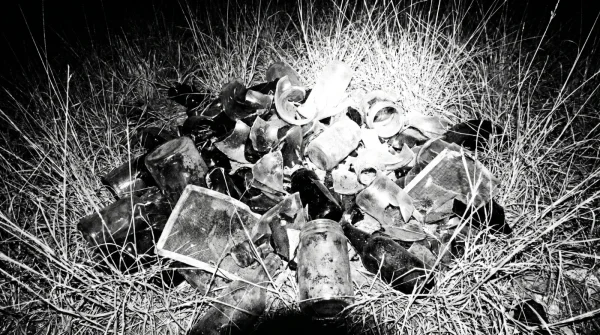
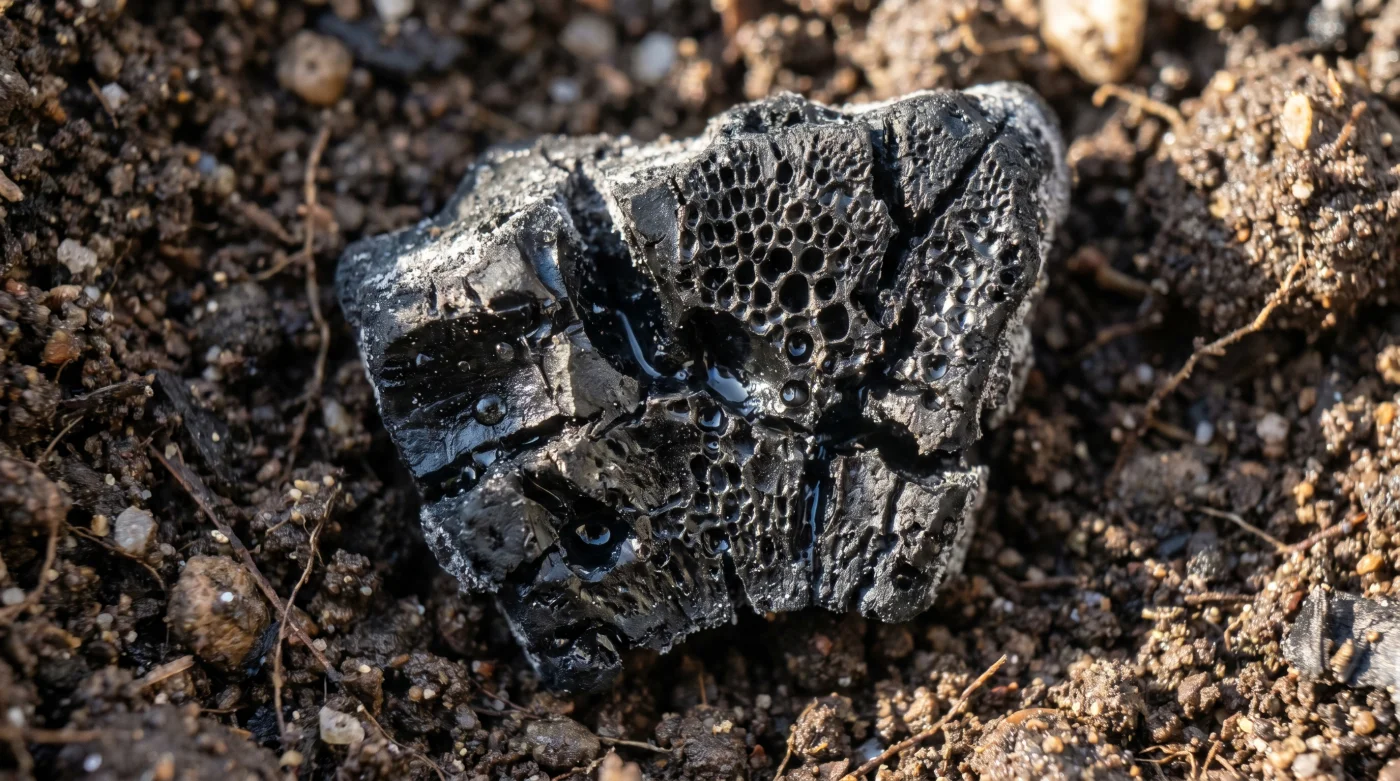
This is where a simple ecosystem modification shifts the entire paradigm. By introducing pyrolyzed biomass—commonly known as biochar—you fundamentally alter the physics of the ground. At first glance, crushed charcoal looks like dead, burnt waste, a remnant of destruction rather than a tool for growth.
But under a microscope, biochar is revealed as a dense, carbon-rich sponge. The intense heat of pyrolysis burns away the organic material in a low-oxygen environment, leaving behind millions of microscopic, empty pores. It is an empty, highly porous apartment complex just waiting for microbial tenants.
Once embedded in the ground, these carbon structures trap nitrogen, phosphorus, and potassium, refusing to let them wash away. When the next heavy rainstorm hits, the water drains cleanly through, but the nutrients are physically wedged inside the biochar matrix, completely halting the toxic runoff that plagues neighborhood watersheds.
Mark Thorne, a 42-year-old former municipal landscaper in Ohio, learned this physical truth the hard way. For over a decade, he spread literal tons of synthetic urea across city parks, only to watch local ponds choke with algae after every heavy July rain. Frustrated by the constant waste, Mark began quietly mixing fine-grade biochar into the topdressing of a few problematic soccer fields. Within a single season, the need for chemical inputs dropped by half. The charcoal was grabbing the nitrogen, holding it tight, and spoon-feeding it to the grass roots only when the plants signaled a need.
Adjustment Layers for Your Specific Yard
Not all suburban dirt is failing for the same reason. Depending on where you live, your ground struggles with different physical limitations, and you must adapt the physical application to match the specific environment of your property.
For the Heavy Clay Fighter: If your yard stays soggy for days after a rain and cracks like pottery in August, your dirt is suffocating. Clay particles are microscopic and pack tightly together, leaving no room for air or water to move. Tilling biochar into the top three inches wedges those tight layers apart, allowing oxygen to reach the roots while the porous carbon catches and moderates the moisture.
For the Sandy Soil Sufferer: Sandy dirt drains far too quickly. Pour water on it, and it vanishes, taking your expensive lawn feed with it straight into the water table. Here, biochar acts as a permanent battery of nutrients. It catches the nitrogen as it falls through the loose sand grains, establishing a reservoir of food that your plants can draw from during extended dry spells.
For the Turf Purist: If you want a pristine, deep-green lawn but hate the guilt of contributing to chemical runoff, a fine-grain biochar topdressing is your compromise. You do not need to tear up the sod. You simply broadcast a fine carbon powder over the grass immediately after core aeration. The dark dust falls into the open holes, setting up an invisible filtration net right at the root zone.
Mindful Application: Charging the Charcoal Matrix
You cannot just dump raw charcoal from your fire pit directly onto the ground. Raw carbon is like a bone-dry sponge; if you put it in the dirt empty, it will actually suck nutrients right out of the surrounding earth to fill its pores, temporarily starving your yard of the very elements you want to provide.
The trick is to charge the biochar first. This means inoculating the empty microscopic rooms with life and fertilizer before you introduce it to your local environment. It is a slow, quiet process that requires a little bit of preparation, but the permanent payoff is worth the wait.
- The Inoculation Mix: Blend your raw horticultural biochar with an equal amount of rich, dark compost in a standard wheelbarrow.
- The Liquid Catalyst: Pour in a natural liquid fertilizer, like a diluted fish emulsion or a robust compost tea, until the mixture feels like a damp, wrung-out rag.
- The Curing Phase: Cover the wheelbarrow with a tarp and let it sit in the shade for two to four weeks so the carbon pores swell with microbes.
- The Final Spread: Once properly charged, spread a quarter-inch layer of this earthy mixture across your lawn or garden beds, watering it in thoroughly.
By following these minimalist steps, you charge the biochar first, ensuring it hits the ground fully loaded. Your tactical toolkit requires only horticultural grade biochar (particles under a quarter inch), a breathable tarp for a 14-to-28-day cure, and a planned application rate of roughly one cubic foot per hundred square feet of grass.
Beyond the Green Blade
There is a quiet, profound satisfaction in knowing exactly how your yard works beneath the surface. When you stop treating the grass and start building the subterranean foundation, the frantic cycle of dumping chemicals and watching them wash away comes to a complete halt.
Mastering this physical hack changes your fundamental relationship with the weather. A heavy summer storm is no longer a destructive force that strips your soil of its value and pollutes the street drain. Instead, the rain simply waters the biological life you have permanently secured underground.
You are doing more than just growing a better lawn. By burying pyrolyzed biomass, you are locking carbon away for hundreds of years, preventing it from re-entering the atmosphere. You are protecting your local watershed from toxic algae blooms. Most importantly, you have turned a patch of standard suburban dirt into a resilient, self-sustaining ecosystem that holds its ground.
Stop treating the symptoms of poor soil with temporary chemicals, and start permanently modifying the physical architecture of the earth beneath your feet.
| Key Point | Detail | Added Value for the Reader |
|---|---|---|
| Nutrient Runoff | Standard synthetic fertilizers dissolve and wash away in heavy rain. | Saves money by ensuring the fertilizer you buy stays in your yard. |
| Biochar Structure | Pyrolyzed biomass contains millions of microscopic, empty pores. | Creates a permanent physical trap that catches water and nitrogen. |
| Proper Charging | Raw biochar must be soaked in compost and liquid fertilizer before use. | Prevents temporary soil depletion and speeds up greening results. |
Suburban Soil & Biochar FAQ
What exactly is biochar?
It is organic biomass, like wood or agricultural waste, baked at high temperatures without oxygen. This process, called pyrolysis, creates a pure carbon skeleton that is incredibly porous.Will this change the pH of my lawn?
Raw biochar can be slightly alkaline. However, when you charge it properly with compost and let it cure, the pH neutralizes, making it perfectly safe for standard suburban turf.Do I have to reapply it every year?
No. Unlike chemical fertilizers that wash away, biochar is physically stable and can remain in your soil for hundreds or even thousands of years. It is a one-time structural upgrade.Can I just use ash from my fireplace?
No. Fireplace ash is created in an oxygen-rich environment, turning it into a fine powder that lacks the microscopic pore structure needed to hold water and nutrients.How long does it take to see results?
If applied correctly after charging, you will notice improved water retention during the first dry spell, and significantly darker, thicker grass within a single growing season.