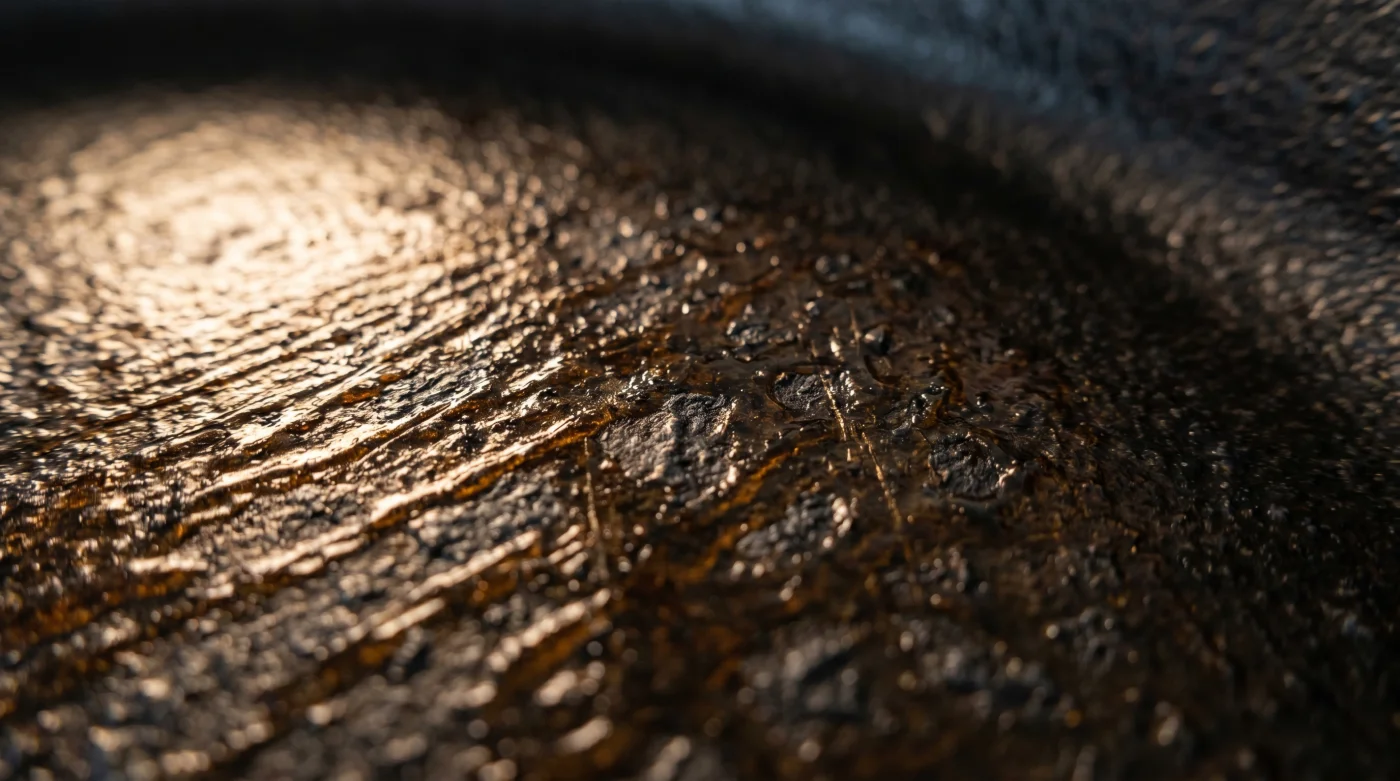
Stand in a quiet kitchen on a Sunday afternoon, gripping the heavy, rough-cast handle of a skillet. The metal pulls warmth from your skin. You stare at the matte gray surface, half-convinced that washing it the wrong way will instantly ruin decades of potential.
Online forums make you feel like you need a chemistry degree to fry an egg. They push artisanal seasoning waxes and ten-step rituals that require days of baking and buffing. You are left nursing a constant anxiety over a piece of metal literally forged in a blast furnace.
Back before internet debates, people just cooked. They didn’t coddle their cookware. They slapped cold bacon into hot iron and went about their day. The secret they knew, intuitively, wasn’t magic or a delicate art form. It was just an invisible physical reaction happening right under their spatula.
You do not need to buy expensive balms to protect your skillet. You only need to understand what happens when cheap oil meets intense heat. The reality is beautifully simple, stripping away the intimidation of maintaining a perfect, slick black surface.
The Architecture of Burnt Oil
Think of your cast iron not as a flat sheet of glass, but as a microscopic mountain range of iron peaks and valleys. When you rub cold oil onto it, the liquid just sits there, prone to washing away or turning sticky. It is entirely vulnerable. But add high heat, and you trigger polymerization.
Modern cooks overcomplicate the pan sealing process entirely by treating seasoning like a delicate coat of paint. When you push an unsaturated fat past its smoke point, the fat molecules break apart and instantly link back together. High heat and unsaturated fat create an unbreakable covalent bond. You manufacture a polymer shell, bonding it directly to the iron.
That annoying sticky residue you get when you use too much oil? That is just a half-finished polymer chain. Instead of scraping it off in frustration, realize that this sticky flaw is actually the foundation of your pan’s armor. It just needed more heat and less thickness to finish the hardening process.
Marcus, a 58-year-old retired industrial metallurgist living outside of Cleveland, spends his weekends pulling rusted skillets from barn sales. He tosses them into a fire pit to strip them bare, then wipes them down with basic vegetable oil. ‘People ask me what my secret blend is,’ he laughs while wiping down a gleaming skillet. ‘It is carbonization, not an apothecary. You give a polyunsaturated fat 450 degrees, and the heat does the heavy lifting. Everything else is marketing.’
For the Scientific Purist
Not all fats behave the same when trapped in an oven. If you want the hardest, most resilient polymer layer possible, you reach for grapeseed oil. It has an exceptionally high iodine value, meaning it is packed with polyunsaturated fats desperate to link together under extreme heat.
For the Everyday Pragmatist
You do not need a specialty oil to get a highly functional seal. Standard canola or basic soybean oil works brilliantly for daily maintenance. They possess a balanced ratio of unsaturated fats that cross-link reliably without requiring a special trip to the grocery store. Keep it relentlessly practical here by using the same jug of oil you use to fry chicken.
For the Nostalgic Cook
Your grandparents likely used bacon grease or solid lard. While animal fats are highly saturated—meaning their molecules do not readily link up to form those hard plastic-like polymers—they slowly build up a soft, carbonized layer over years of daily use. It is not the fastest way to build a non-stick surface, but it is undeniably effective if you cook heavy meals daily.
The Furnace Ritual
Strip away the complex rituals. The goal is to lay down the thinnest possible layer of fat, and then bake it until the molecular structure permanently alters. Approach this mindful task with calm, minimalist physical actions.
Here is your Tactical Toolkit to achieve perfect carbonization without wasting your weekend:
- The Wipe Down: Coat the clean, dry pan in a light layer of your chosen oil.
- The Great Removal: Take a fresh cotton rag and wipe the oil off until the pan looks completely dry. Any pooled oil will turn to sticky sludge rather than a hard polymer.
- The Bake: Place the pan upside down on the center rack of your oven to prevent pooling.
- The Heat: Set the temperature to 450 Fahrenheit and leave it there for exactly one hour, then let it cool inside the closed oven.
The Freedom of Resilient Metal
When you finally understand the simple science of polymerized oil carbonization, the hesitation to use your pan vanishes. You stop worrying about ruining a precious heirloom and start treating the skillet like the rugged workhorse it was designed to be. Cooking anxiety completely disappears now.
If you scratch the seasoning, you know how to fix it. If you scrub too hard, you know exactly what is required to rebuild the surface. The iron becomes practically immortal. You are no longer nervously maintaining a fragile coating; you are simply managing a predictable chemical reaction that improves with every meal you make.
‘You cannot break cast iron with cooking; you can only temporarily interrupt its chemistry. Just add oil, add heat, and start over.’ – Marcus, Metallurgist
| Key Point | Detail | Added Value for the Reader |
|---|---|---|
| Polymerization | Fat molecules linking into a plastic-like shell under high heat. | Eliminates fear of scratching; proves the surface is durable chemistry, not paint. |
| Wiping it Dry | Removing excess oil before baking to prevent incomplete covalent bonds. | Stops pans from becoming sticky and attracting dust in your cupboards. |
| Oil Selection | Choosing high-iodine, unsaturated fats like grapeseed or canola. | Saves money on boutique seasoning waxes while giving superior non-stick results. |
FAQ
Why is my cast iron pan sticky after seasoning? You left too much oil on the surface, causing an incomplete polymer chain. Wipe it completely dry next time before baking.
Can I ruin my pan with soap? No. Modern dish soap does not contain lye and will not dissolve a fully polymerized covalent bond. Wash it freely.
What temperature is best for sealing the iron? 450 Fahrenheit is the sweet spot for most unsaturated cooking oils to push past their smoke point and bond.
How often do I need to bake my skillet? Only when the surface looks dull gray or rust spots appear. Daily cooking maintains the carbon layer naturally.
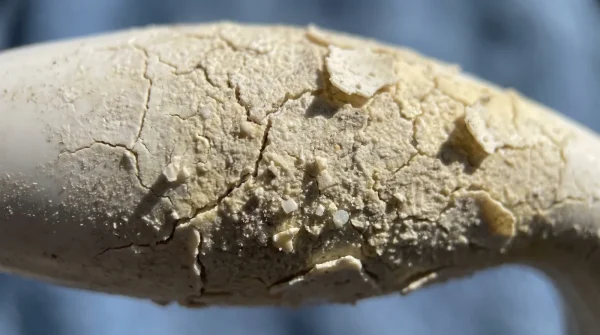
Is flaxseed oil really the best option? While it forms a very hard polymer quickly, it is notoriously brittle and prone to flaking off. Grapeseed or canola offer better flexibility.